
Baltimore City Court Docket Basics
A docket is a chronological list of case activity. It can show when a complaint was filed, when a summons issued, when a motion was received, when a hearing was set, when an order was entered, and how the case ended. Baltimore City dockets matter because the courthouse system is split by function. A Circuit Court docket may involve a felony, divorce, jury case, major civil case, juvenile-restricted matter, or District Court appeal. A District Court docket may involve traffic, landlord-tenant, replevin, small civil claims, misdemeanors, or certain felonies.
The docket is not the same as the whole case file. The docket is the index and event history. The full file may include pleadings, exhibits, scanned orders, notices, financial papers, or other documents that require a clerk request. Maryland Judiciary Case Search can be the public entry point, but it does not promise document downloads from the public view.
Note: A docket entry can identify a filing without making the filing itself available for online public review.
How to Find Baltimore City Dockets Online
Maryland Judiciary Case Search is the main public search tool for many state court dockets in Baltimore City. Use it for public District Court and Circuit Court case information when the case is available to the public. The best search starts with the case number. If that is not known, search by party name, then confirm the court, case type, filing date, and party role before relying on the result.
- Open the official Maryland Judiciary Case Search portal.
- Search by case number if available, or by name when the number is unknown.
- Confirm that the result belongs to Baltimore City and to the correct court level.
- Open the public case detail and read docket entries in date order.
- Contact the correct clerk if the docket refers to a document that is not available online.
For state court cases, use the official Maryland source before any nonofficial mirror. For federal cases in Baltimore, use the U.S. District Court for the District of Maryland, CM/ECF, and PACER instead of Case Search.
Baltimore City Docket Entry Fields
A full live sample docket was not available from the public portal because the portal was protected by browser controls. The court-record inventory still gives the core docket fields that Baltimore City users should expect to evaluate. The key is to read the docket as a time line. A later amended charge, order, dismissal, or judgment can change the meaning of an earlier entry.
| Field | What It Shows |
|---|---|
| Entry Date | The date the filing, hearing notice, order, judgment, or other event was entered. |
| Event Type | The kind of action, such as motion, summons, hearing, order, disposition, or appeal. |
| Party or Actor | The party, attorney, clerk, court, or agency tied to the entry when shown. |
| Hearing Information | Date, time, location, judge, courtroom, or hearing type when public. |
| Disposition | The outcome or status, such as dismissed, guilty, nolle prosequi, judgment entered, pending, or closed. |
| Financial Entry | Costs, fines, restitution, bond, fees, judgments, or claims when the docket includes public money data. |
Courts With Baltimore City Dockets
Baltimore City state dockets are tied to Maryland's court structure. The Maryland Judiciary court directory places Baltimore City in the Eighth Judicial Circuit for Circuit Court administration, the 1st District for District Court, and the 6th Appellate Circuit for appellate-circuit purposes. That structure controls where a hearing appears and which clerk can answer docket questions.
- Circuit Court for Baltimore City dockets cover felonies, jury trials, major civil cases, family cases, divorce, juvenile-restricted matters, and appeals from District Court.
- District Court of Maryland District 1 dockets cover traffic, landlord-tenant, replevin, misdemeanors, certain felonies, and civil claims up to $30,000.
- Orphans' Court and Register of Wills records cover probate hearings, estates, wills, personal representatives, claims, and related filings.
- Appellate Court of Maryland and Supreme Court of Maryland dockets matter only after a case has moved into appellate review.
Baltimore City District Court has multiple locations. The official District Court location pages list Wabash, Hargrove, Eastside, and Hubbard, so a hearing notice should be checked for the exact location before anyone travels to court.
Baltimore City Dockets vs Case Files
The docket and the case file serve different needs. A docket helps track status, deadlines, hearing dates, and outcomes. A case file gives the underlying documents when they are public and available. A landlord-tenant docket entry may show judgment or possession activity, while the file may hold the complaint and notices. A criminal docket may show charges, plea, disposition, and sentence, while the file may hold motions and orders.
| Feature | Docket | Full Case Record |
|---|---|---|
| Format | Chronological entry list | Documents, orders, pleadings, and exhibits when public |
| Online Access | Often searchable through public case lookup | May require clerk inspection, copy request, or certification |
| Best Use | Track case status, hearings, and outcomes | Review the substance of filings and court orders |
| Limits | May use shorthand or omit restricted details | May be sealed, redacted, paper-only, or fee-based |
Federal Dockets for Baltimore City Cases
Federal cases do not appear in Maryland Judiciary Case Search. Baltimore City is within the District of Maryland for federal court purposes. Federal criminal prosecutions, federal civil cases, civil rights cases, diversity cases, habeas matters, bankruptcy cases, and federal appeals use federal systems. The official route is the U.S. District Court for the District of Maryland, District of Maryland CM/ECF, PACER, the U.S. Bankruptcy Court for the District of Maryland, and the U.S. Court of Appeals for the Fourth Circuit.
The manifest image from PACER reflects the official federal case-access path for docket sheets and filings.
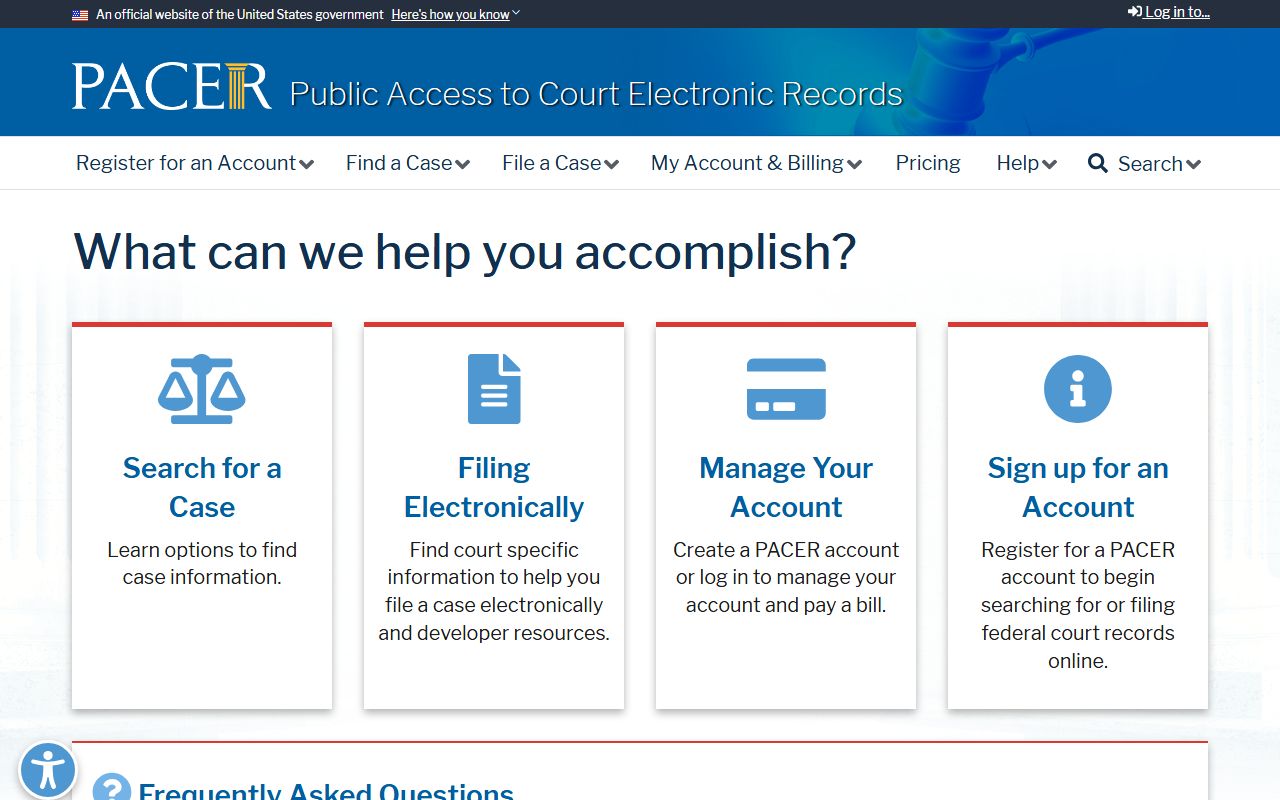
PACER is account-based and may charge access fees depending on use and exemptions, so state court users should not confuse it with free Maryland Case Search.
The manifest image from District of Maryland CM/ECF shows the filing system used for federal electronic case activity.
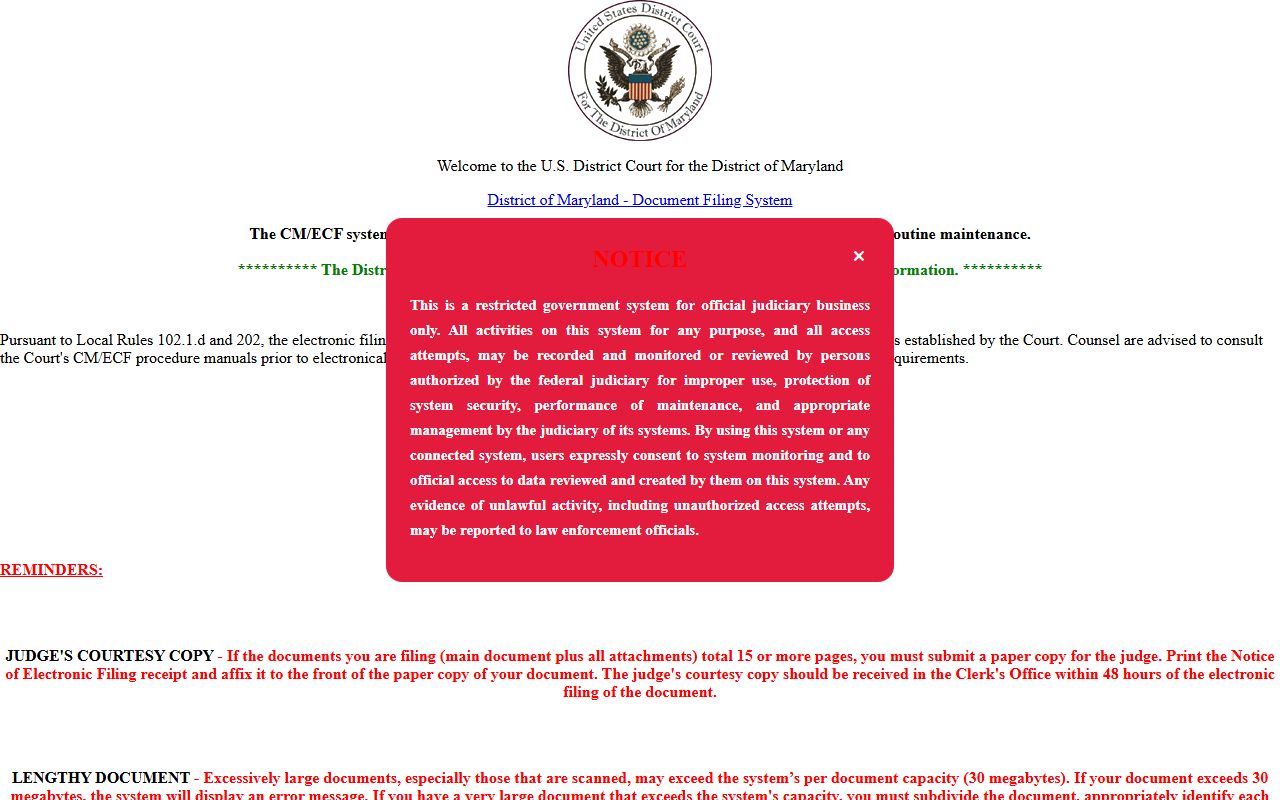
CM/ECF is not the Baltimore City Circuit Court docket. It belongs to the federal District of Maryland.
The manifest image from the U.S. Bankruptcy Court for the District of Maryland marks the separate route for bankruptcy dockets.
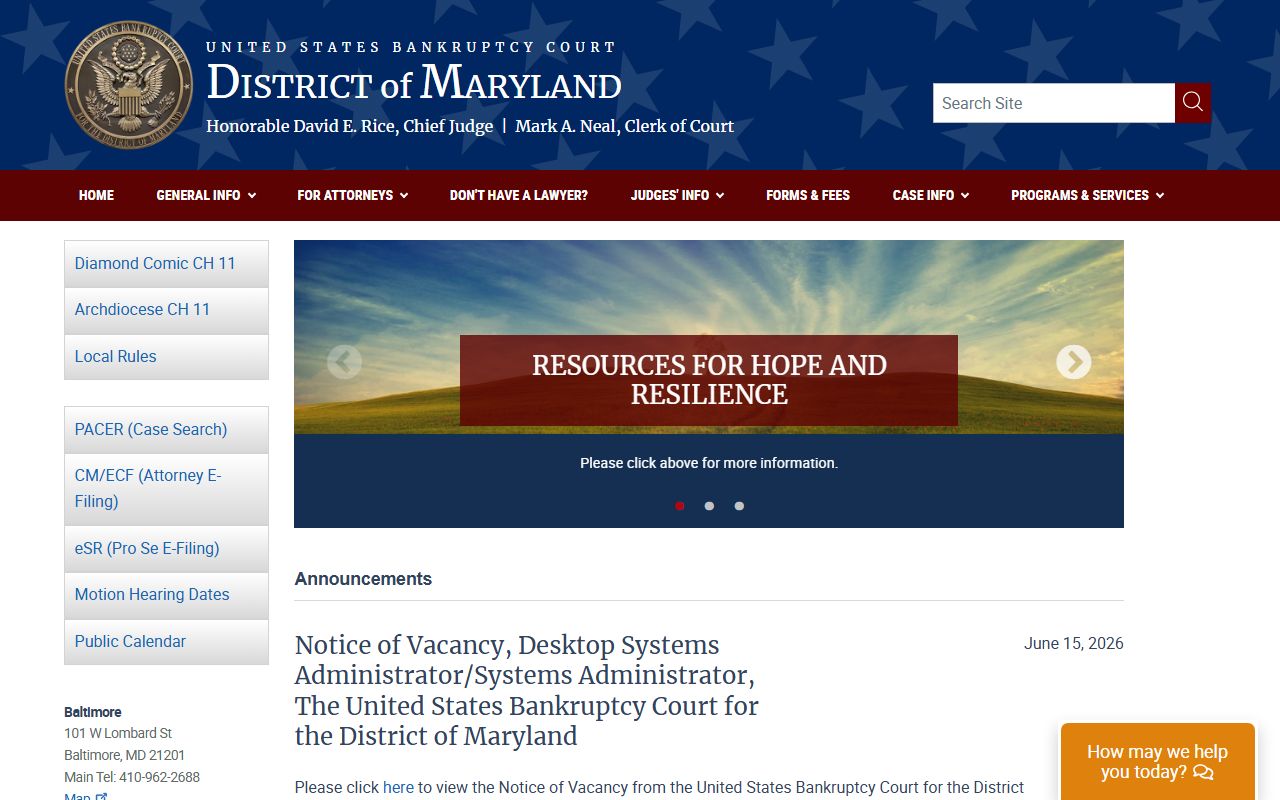
Bankruptcy records are federal records, even when the debtor or creditor is located in Baltimore City.
The manifest image from the Fourth Circuit Court of Appeals supports the appellate route for federal appeals from Maryland.
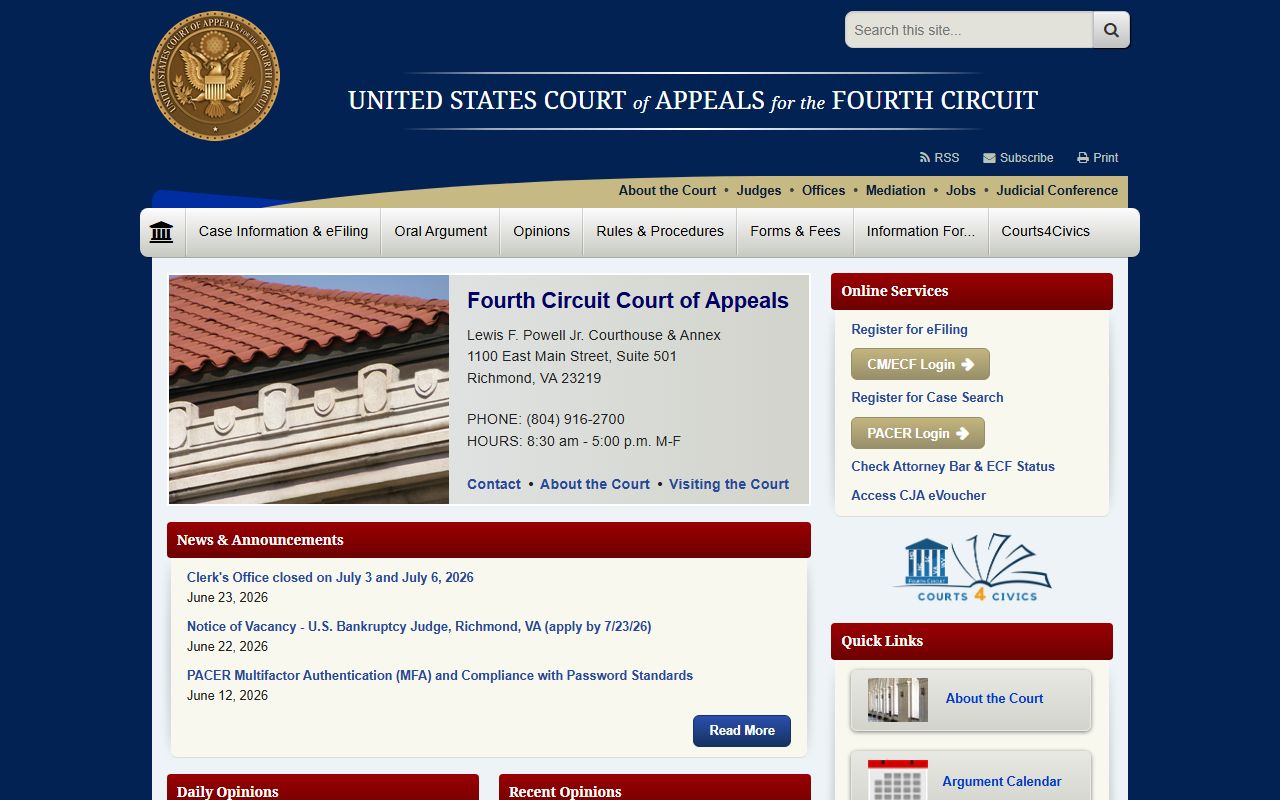
Fourth Circuit dockets come after federal district court proceedings, not at the start of a local Maryland case search.
Read Baltimore City Docket Status
Some docket words carry specific meaning. A motion is a written request for the judge to act. An order is the court's ruling or direction. A disposition is the case outcome. A judgment is a final or enforceable decision in many civil cases. In a criminal docket, nolle prosequi means the prosecutor declined to proceed on a charge, while stet is an inactive status that may be reopened under conditions.
Docket entries should be read from start to finish. A charge may be amended. A civil judgment may later be satisfied. A hearing may be continued. A warrant may be recalled. A case may be appealed from District Court to Circuit Court. For a complete document review, the docket entry is the clue, and the clerk route is the source.