
Search Baltimore City Court Records Online
Maryland Judiciary Case Search is the primary public portal for many Baltimore City court records. It can show public District Court and Circuit Court case information when a case is not sealed, expunged, juvenile, adoption-related, or otherwise restricted. The portal is useful for finding the court name, case number, parties, filing date, charges or claim type, docket entries, hearing dates, and disposition. It should not be treated as a document download site. Public case detail often points to the record, while copies and certified copies route to the correct clerk.
The search route depends on the record. Circuit Court for Baltimore City handles felony, jury, major civil, family, divorce, juvenile, and appeal matters. District Court of Maryland District 1 handles traffic, landlord-tenant, replevin, misdemeanors, certain concurrent-jurisdiction felonies, and civil claims of $30,000 or less. Probate records route to the Register of Wills and Orphans' Court, not the general court-record counter.
- Start with the official Maryland Judiciary court records page or Case Search portal.
- Search by a person's name, business name, or exact case number when known.
- Use court, jurisdiction, case type, party role, and date filters when the portal exposes them.
- Confirm whether the result is from Circuit Court for Baltimore City or District Court of Maryland District 1.
- Use the case number and court name when requesting copies from the Clerk of the Circuit Court or a District Court clerk.
The Maryland Judiciary court records page is the source for Case Search access and statewide court-record guidance. That public portal helps locate the case, while the clerk route supplies inspection, copies, certifications, and records that are not online.
Baltimore City Court Records Search Fields
The Case Search field inventory was only partly confirmed because the live public portal used browser and challenge controls during research. Baltimore City search terms should be entered with care because a District Court traffic case, a Circuit Court felony, and a family matter can all have different numbering and docket patterns. A case-number search is best when paperwork is available. A name search can work, but it may return people with similar names or cases in other Maryland courts.
| Field Label | Type | Required | Notes / Format |
|---|---|---|---|
| Search For / Name | Text | Unspecified | Use first name, last name, or business name depending on search mode. |
| Case Number | Text | Unspecified | Use the exact number from a notice, docket sheet, citation, or court paper. |
| Court / Jurisdiction | Dropdown or filter | Optional or unspecified | Select Baltimore City or a court level when filters are available. |
| Case Type | Dropdown or filter | Optional or unspecified | Civil, criminal, traffic, family, and other categories may be available. |
| Filing Date / Date Range | Date | Optional or unspecified | Use the date format requested by the portal if a date filter is shown. |
| Search / Clear | Button | Not applicable | Runs the lookup or clears the criteria. |
The field table should be read as a practical search aid, not as a claim that every field appears in every public search mode. If the online record is missing, the next step is to check the correct court or agency rather than assume the case does not exist.
Types of Baltimore City Court Records
Baltimore City court records are split by court and subject. Civil filings can be in Circuit Court or District Court. District Court civil jurisdiction includes small claims and civil claims up to $30,000, while Circuit Court handles larger civil disputes, jury demands, equity matters, appeals, and cases outside District Court jurisdiction. Criminal records also split by level. District Court handles misdemeanors and certain felonies, while Circuit Court handles felonies and jury-trial matters.
Family records, probate records, traffic matters, protective orders, landlord-tenant filings, and juvenile matters do not all follow the same public-access rules. Divorce records are Circuit Court family records. Estate files are through the Register of Wills and Orphans' Court. Traffic cases are District Court records, while driver-history records are separate MVA records. A criminal court record is also different from an arrest record, which is why charge and custody details may require different official channels.
- Civil court records may include complaints, service returns, motions, orders, judgments, garnishments, liens, and appeals.
- Criminal court records may show charging documents, pleas, bond entries, motions, dispositions, sentencing, probation, and appeals.
- Family court records may include divorce, custody, child support, visitation, guardianship, and domestic matters, with sensitive parts restricted.
- Probate records may include wills, estate petitions, letters, inventories, accounts, claims, notices, and Orphans' Court orders.
- Traffic court records may show citation details, court dates, pleas, payments, dispositions, fines, costs, and failure-to-appear entries.
For probate matters, the Register of Wills search tools are separate from Case Search. The manifest image from Maryland Estates and Trusts section 5-601 shows why estate records need their own route when a small-estate issue appears beside a court-record search.
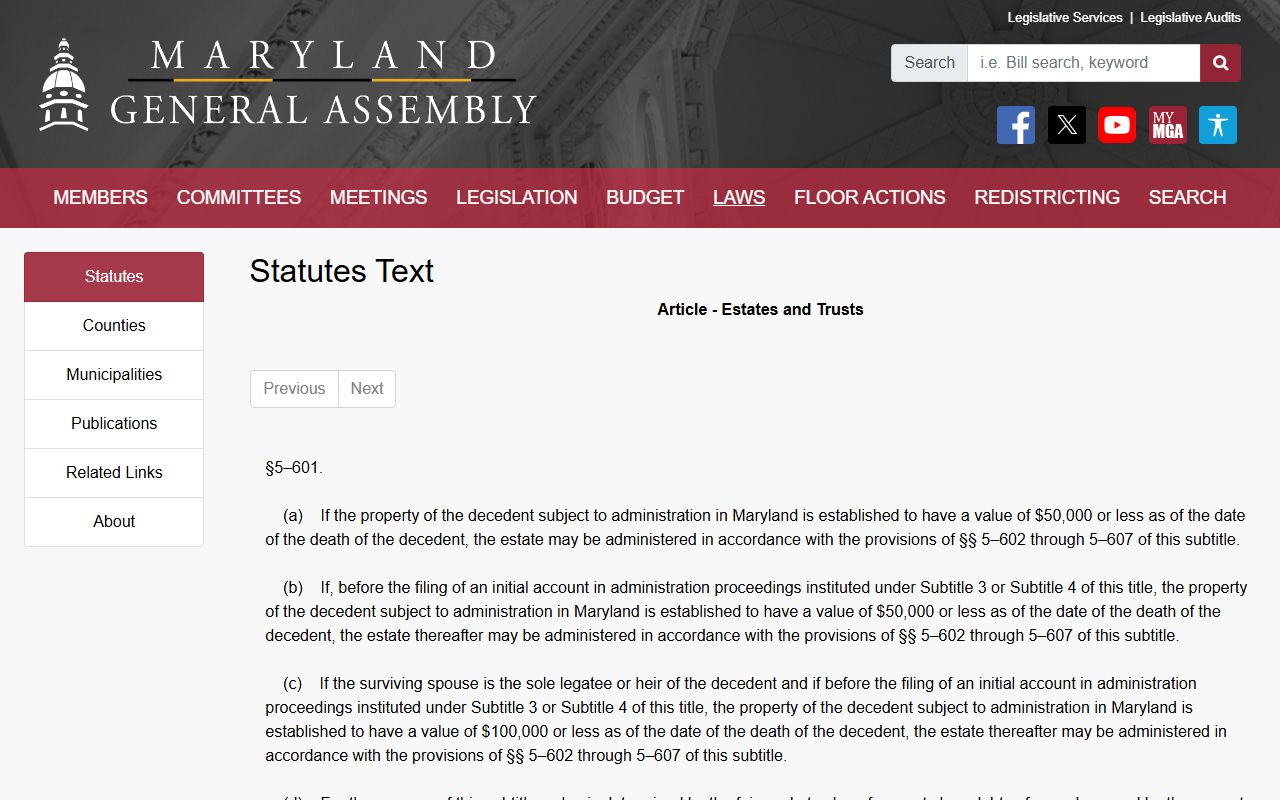
That estate statute source supports the local distinction between general court cases and Orphans' Court or Register of Wills records.
What Baltimore City Court Records Show
A Baltimore City court record is often a case map. It may not give every document online, but it usually gives the facts needed to identify the matter and route a copy request. Docket entries are the time line. They list filings, hearings, orders, notices, judgments, dispositions, and appeals in date order. The same entry can have different weight depending on the court type. A traffic disposition, a felony sentencing entry, and a divorce order all need to be read in context.
| Field | What It Shows |
|---|---|
| Case Number | The identifier assigned by the court system. Exact punctuation helps avoid a wrong match. |
| Court | Whether the matter is in Circuit Court for Baltimore City, District Court District 1, or Orphans' Court. |
| Filing Date | The date the case, charge, citation, petition, or estate filing entered the court system. |
| Parties | Names and roles such as plaintiff, defendant, petitioner, respondent, State, decedent, or claimant. |
| Charges or Claims | Offense name, statute, count, claim type, civil amount, estate type, or traffic citation information. |
| Docket Entries | A chronological list of filings, hearings, orders, notices, dispositions, judgments, and appeals. |
| Disposition | The outcome, such as dismissed, guilty, nolle prosequi, stet, judgment entered, closed, or pending. |
| Financial Entries | Filing fees, fines, costs, restitution, bond, judgments, claims, or probate fees when public. |
Public Access for Baltimore City Court Records
Maryland public access uses more than one rule set. Maryland General Provisions section 4-201 gives a general right to inspect public records of a public agency unless an exemption applies. Court case files, however, also follow court access rules and clerk procedures. That is why Case Search may show public case data while documents, certifications, older records, and nonpublic details still require the correct court office.
Maryland General Provisions section 4-301 requires denial when a statute, court rule, or court order bars inspection. In Baltimore City, that matters for juvenile records, sealed files, expunged matters, adoption records, mental health information, protected addresses, minors' names, Social Security numbers, financial account numbers, and medical details. Agency administrative records may use Maryland PIA routes, but court case records are not handled like ordinary police or agency files.
The manifest image from Maryland's general right of inspection statute anchors the public-access rule that applies before exemptions are considered.
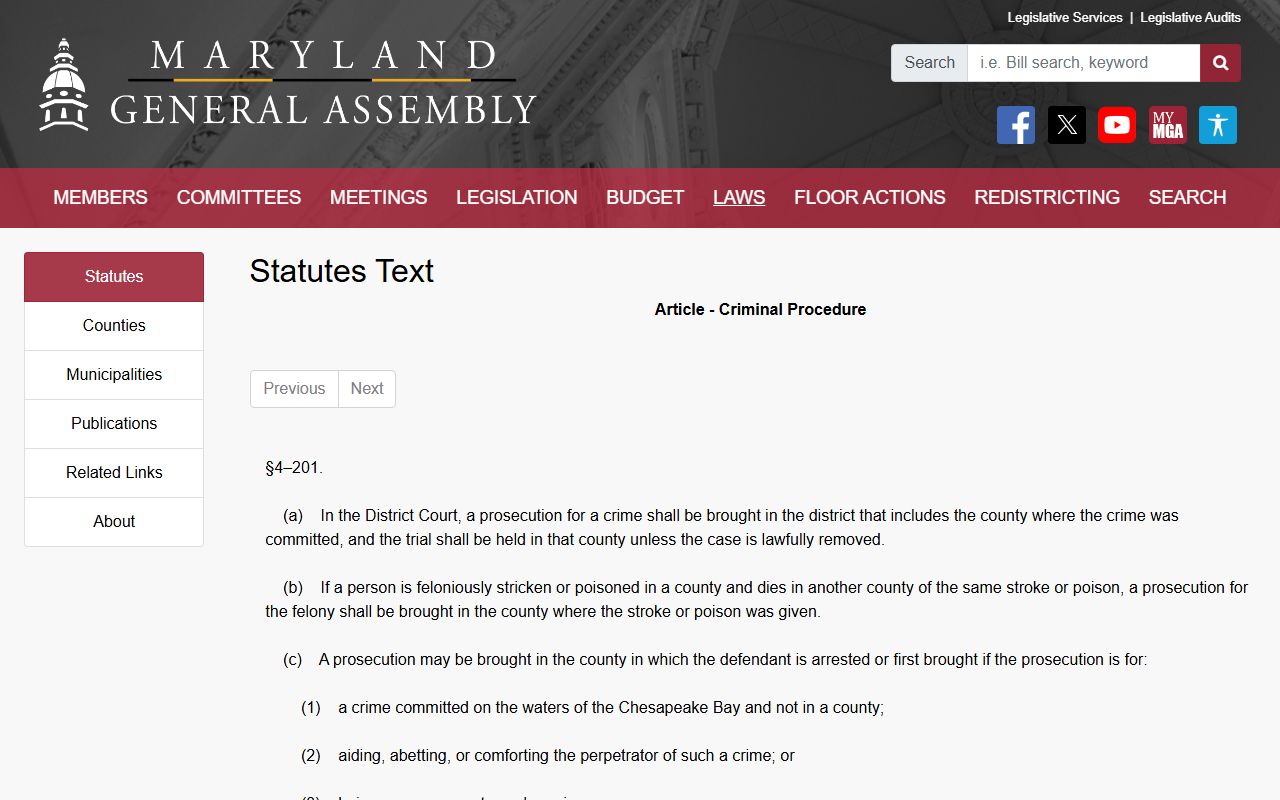
The follow-up limit is just as important: the right to inspect does not override a court rule, sealing order, or required denial.
Note: Public access can identify a case without making every filing, exhibit, or personal detail available online.
Restricted Baltimore City Court Records
Restricted court records are not gaps in the search system. They are records withheld by law, rule, or order. Juvenile delinquency and child-welfare records are not ordinary public files. Adoption proceedings are confidential. Mental health proceedings and treatment facts are sensitive. Sealed and expunged records may be removed from public Case Search. Personal identifiers are redacted even when the surrounding case remains open for public inspection.
Expungement is a common reason a criminal or charge record may disappear from ordinary search results. Maryland Judiciary expungement guidance and Criminal Procedure sections 10-105 and 10-110 control many eligibility paths. A missing record can also mean the search used the wrong court level, an old file has not migrated, the name was misspelled, or the police event never became a filed court case.
The manifest image from Maryland's required-denial statute supports the rule that some Baltimore City court records must be withheld from public inspection.
That required-denial rule explains why a clerk may refuse access even when a requester knows the case number.
Baltimore City Court Record Requests
When the online search is not enough, the request should go to the office that holds the record. The Clerk of the Circuit Court handles Circuit Court files and related copies. District Court clerks handle District Court traffic, landlord-tenant, small civil, and lower-level criminal matters. The Register of Wills handles estate records and probate copy routes. DPSCS handles custody-location records after booking or commitment. Federal cases route to PACER or the U.S. District Court for the District of Maryland, not Maryland Case Search.
Clerk of the Circuit Court
100 North Calvert Street
Baltimore, MD 21202
410-333-3733
Use the specific court division or record type when calling.
Register of Wills
111 North Calvert Street, 3rd Floor
Baltimore, MD 21202
410-752-5131
Call before visiting because appointments are taken ahead of walk-ins.
For certified copies, provide the court, case number, party names, filing date if known, and the exact document needed. Public online data may be enough for screening, but legal use often requires a certified clerk copy.